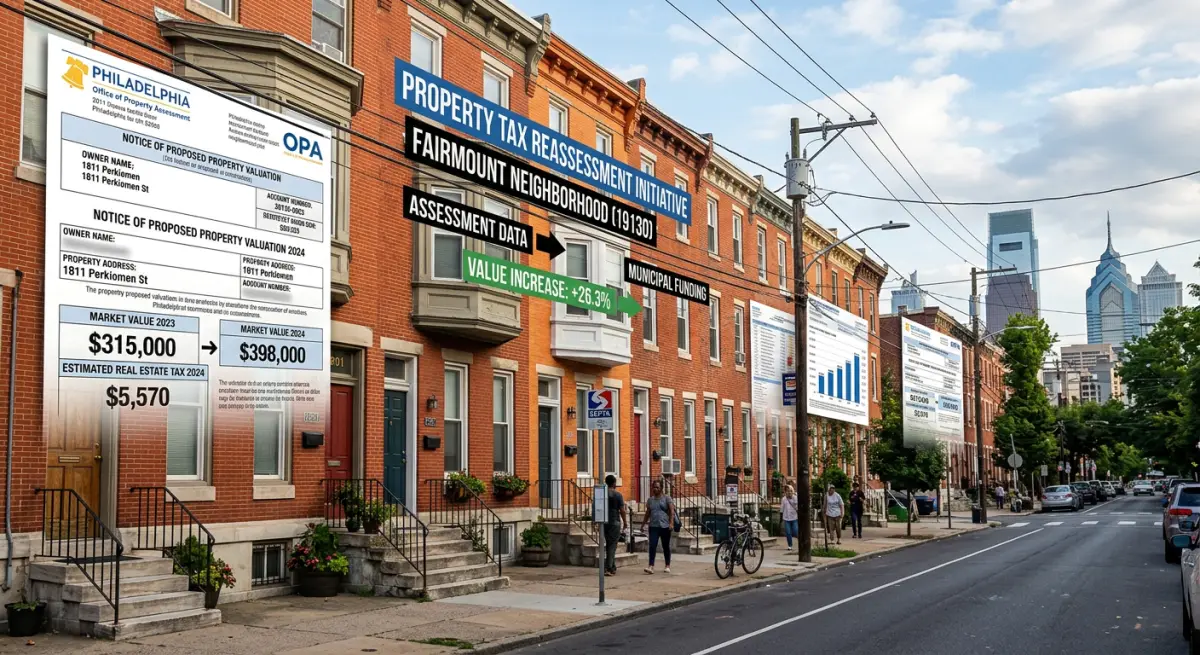
Philadelphia’s 2026 property tax reassessment cycle is underway, and many single-family rental owners are receiving notices with assessment increases that could affect their cash flow and investment strategy.
Understanding the Reassessment
The Office of Property Assessment (OPA) conducts reassessments to bring assessed values in line with actual market values. In 2026, the reassessment affects properties in several neighborhoods that have seen significant price appreciation since the last cycle.
Key facts about the 2026 reassessment:
- Notices were mailed in August 2026
- New assessed values take effect for the 2027 tax year (bills due March 2027)
- The citywide average increase is approximately 12%
- Some neighborhoods are seeing increases of 20-35%
Neighborhoods Most Affected
The neighborhoods with the largest assessment increases are those that have experienced the most market appreciation:
- Fishtown: Average increase of 28%
- Point Breeze: Average increase of 31%
- Passyunk Square: Average increase of 24%
- East Kensington: Average increase of 26%
- Graduate Hospital area: Average increase of 22%
These neighborhoods have seen significant investment and price appreciation over the past several years, and the reassessment is catching up to market reality.
Impact on SFR Cash Flow
For a property assessed at $200,000 with a 28% increase, the new assessment would be $256,000. At Philadelphia’s residential tax rate of 1.3998%, the annual tax bill would increase from $2,800 to $3,583 — an increase of $783 per year, or about $65 per month.
For SFR operators with multiple properties in affected neighborhoods, the cumulative impact can be meaningful. A 10-property portfolio in Fishtown could see tax increases totaling $7,000-$8,000 annually.
Appealing Your Assessment
Property owners have the right to appeal their assessment. The appeal deadline is October 7, 2026. To succeed, you need to demonstrate that the assessed value exceeds the actual market value of the property.
Steps to appeal:
- Review the assessment notice and compare to your property’s market value
- Gather comparable sales data (the OPA website provides recent sales records)
- Document any property conditions that reduce value (deferred maintenance, code violations)
- File the appeal with the Board of Revision of Taxes by October 7
- Prepare to present your case at a hearing (typically scheduled 2-4 months after filing)
Many SFR owners use property tax appeal services that work on contingency, charging a percentage of the first year’s tax savings. This can be worthwhile for properties with large assessment increases.
Strategic Considerations for SFR Operators
The reassessment has several strategic implications:
- Rent pricing: Some of the tax increase can be passed through to tenants, but market conditions will dictate how much
- Acquisition underwriting: Future tax increases should be factored into acquisition models for properties in appreciating neighborhoods
- Portfolio review: Properties with the largest assessment increases may warrant a deeper cash flow analysis to ensure they remain profitable