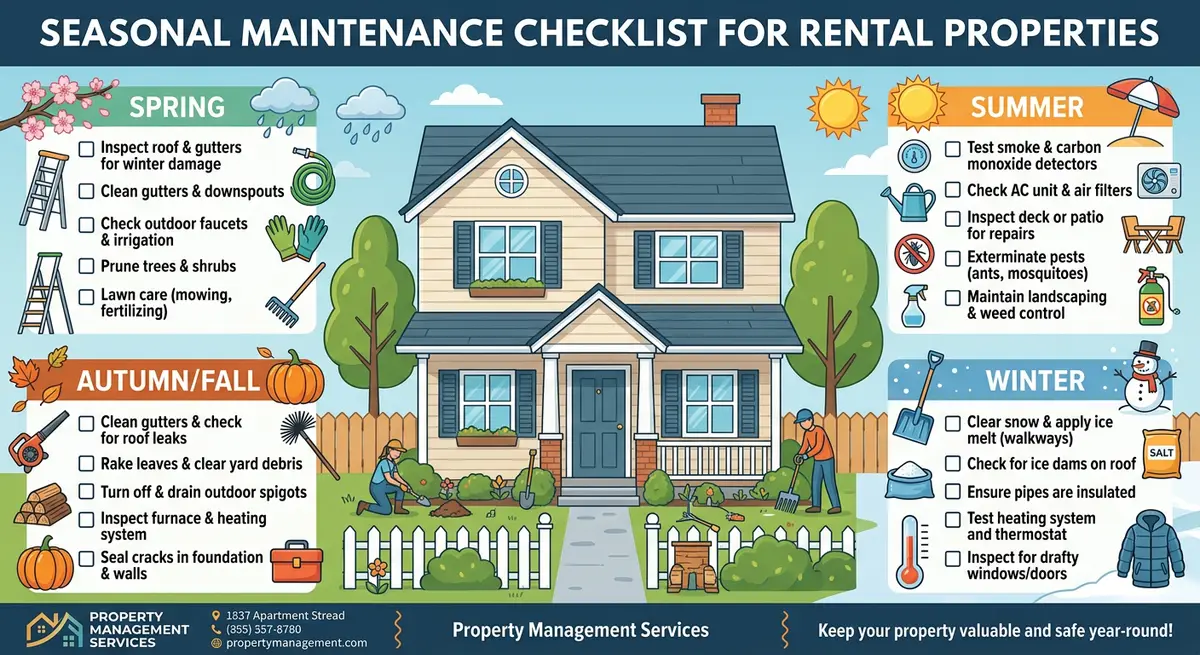
Preventive maintenance is the single most effective way to protect property value, avoid costly emergency repairs, and keep tenants satisfied. This seasonal checklist covers the essential tasks every SFR operator should schedule throughout the year.
Fall (September-November)
Fall is the critical season for preparing properties for winter weather. Missing fall maintenance tasks leads to the most expensive emergency repairs of the year.
- HVAC inspection: Schedule a professional heating system tune-up before cold weather arrives. Replace furnace filters and test all heating components.
- Gutter cleaning: Clear all gutters and downspouts of leaves and debris. Clogged gutters cause ice dams and water damage.
- Weather stripping: Inspect and replace weather stripping around doors and windows to prevent heat loss and drafts.
- Pipe insulation: Insulate exposed pipes in unheated areas (basements, crawl spaces, garages) to prevent freezing.
- Roof inspection: Check for missing or damaged shingles and flashing. Address any issues before winter weather makes repairs impossible.
- Chimney cleaning: If the property has a working fireplace, schedule a chimney sweep and inspection.
- Lawn winterization: Apply winter fertilizer, aerate if needed, and mark sprinkler heads for snow removal.
Winter (December-February)
Winter maintenance is focused on monitoring and responding quickly to issues.
- HVAC filter replacement: Replace filters monthly during heavy heating season.
- Ice dam monitoring: After significant snowfall, check for ice dams forming on roof edges and address promptly.
- Plumbing checks: Monitor for signs of pipe freezing — reduced water pressure, frost on pipes, unusual odors.
- Snow removal: Ensure snow removal responsibilities are clear in the lease and that walkways are kept safe.
- Pest inspection: Winter drives rodents indoors. Check for signs of entry and seal any gaps.
Spring (March-May)
Spring is the season for addressing winter damage and preparing for the rental season.
- HVAC transition: Switch from heating to cooling. Schedule AC tune-up and refrigerant check.
- Exterior inspection: Walk the entire property checking for winter damage — cracked siding, damaged screens, loose gutters, cracked walkways.
- Landscaping restart: Prune trees and shrubs, apply pre-emergent, start mowing schedule, and check irrigation systems.
- Roof and gutter check: Inspect for any winter damage to roofing and gutters.
- Pest treatment: Schedule spring pest control treatment for ants, termites, and other seasonal pests.
- Lease renewal review: Review upcoming lease expirations and begin renewal discussions 60-90 days ahead.
Summer (June-August)
Summer maintenance focuses on cooling systems, exterior upkeep, and preparing for the peak leasing season.
- AC maintenance: Replace filters monthly. Monitor for reduced cooling performance and refrigerant leaks.
- Lawn and landscape: Maintain mowing, watering, and weed control. Check for drought stress.
- Exterior painting: Summer is ideal for touching up or repainting exterior trim and siding.
- Deck and fence inspection: Check for rot, loose boards, and structural issues. Reseal or stain as needed.
- Window screen repair: Replace torn screens and ensure all windows open and close properly.
- Lease turnover preparation: Prepare for summer move-outs with make-ready checklists and contractor scheduling.
The Business Case for Preventive Maintenance
Properties on a consistent preventive maintenance schedule have 40-60% lower repair costs over a five-year period compared to reactive maintenance. The math is simple: a $150 gutter cleaning prevents a $5,000 ice dam repair. A $200 HVAC tune-up prevents a $4,000 furnace replacement.
For SFR operators managing multiple properties, a shared maintenance calendar across the portfolio ensures no property is overlooked and that contractor scheduling is efficient.
