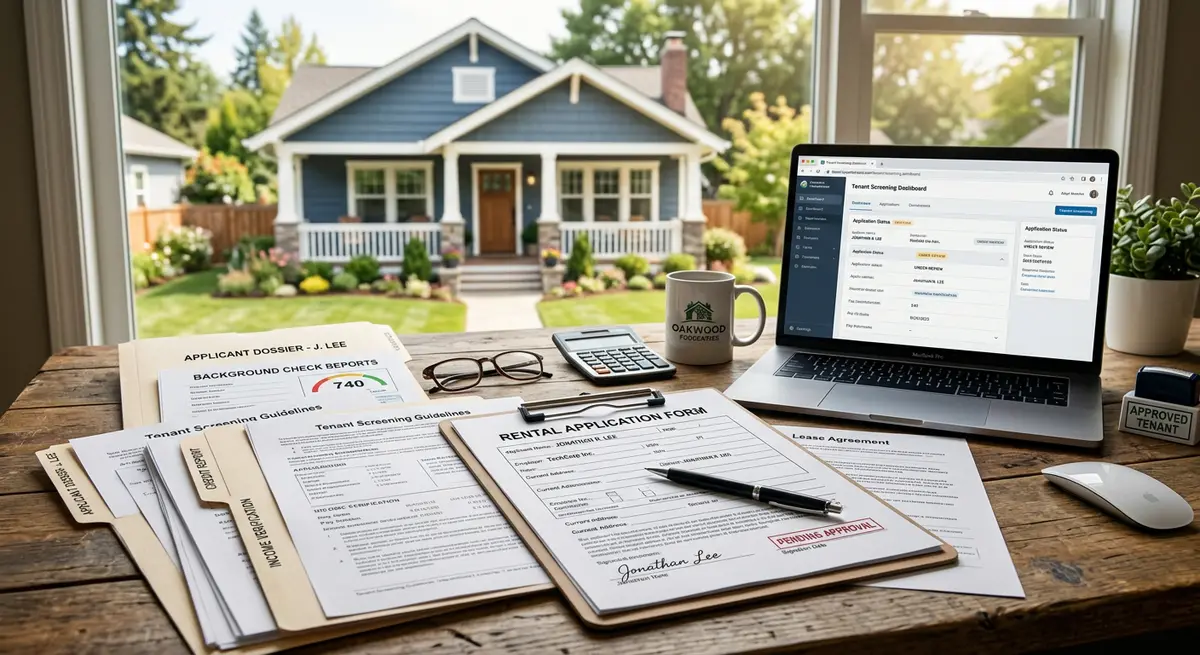
Tenant screening is the single most important process in single-family rental management. A good screening process prevents costly evictions, reduces turnover, and protects your property. A poor one — or worse, no screening at all — can lead to thousands in lost rent and property damage.
The Essential Screening Components
A complete tenant screening process includes five components:
1. Credit Report
Pull a full credit report, not just a score. Look for:
- Payment history: Are there recent late payments, collections, or charge-offs?
- Debt-to-income ratio: How much of their monthly income goes to debt service?
- Eviction history: Many credit reports now include prior eviction filings
- Bankruptcies: Chapter 7 or 13 filings and their discharge status
A credit score of 620 is a common minimum for SFR, but the full report tells a more nuanced story than the number alone.
2. Income Verification
Verify income independently — never rely on pay stubs alone, which are easily fabricated.
- Request two recent pay stubs AND employer verification
- For self-employed applicants, request two years of tax returns and bank statements
- Require gross monthly income of at least 2.5-3x the monthly rent
- Verify employment by calling the employer directly (not the number on the pay stub)
3. Rental History
Contact at least two previous landlords — not the current one, who may have an incentive to encourage the tenant to leave.
Ask specific questions:
- Did the tenant pay on time?
- Were there any lease violations?
- Did they provide proper notice before moving?
- Would you rent to this tenant again?
- Did they leave the property in good condition?
4. Background Check
A criminal background check is legal in most jurisdictions, but the rules are strict. You cannot have a blanket policy denying all applicants with a criminal record — you must consider the nature, severity, and recency of the conviction in relation to the rental.
5. Identity Verification
Verify the applicant’s identity with a government-issued photo ID and confirm the Social Security number matches the credit report.
Fair Housing Compliance
The most critical aspect of screening is consistency and compliance with fair housing laws. The Fair Housing Act prohibits discrimination based on race, color, national origin, religion, sex, familial status, and disability. Many states and cities add additional protected classes.
Best practices for compliance:
- Written screening criteria: Document your criteria and apply them uniformly to every applicant
- Adverse action notices: If you deny an applicant based on credit or background check results, provide a written adverse action notice with the reason and the reporting agency’s contact information
- No exceptions: Never make an exception to your screening criteria for one applicant that you wouldn’t make for another
- Objective standards: Use income ratios, credit score minimums, and rental history requirements — not gut feelings
Common Screening Mistakes to Avoid
- Skipping the income verification: Trusting pay stubs without employer confirmation
- Only contacting the current landlord: The current landlord may not be honest
- Inconsistent application of criteria: Making exceptions for some applicants but not others
- Not documenting the decision: Keep records of why each applicant was approved or denied
- Rushing the process: A bad tenant costs far more than an extra week of vacancy
Setting Up a Screening Workflow
For SFR operators with multiple properties, a standardized screening workflow ensures consistency and saves time:
- Online application form with required fields and consent for background/credit check
- Automated credit and background check through a screening service
- Manual income verification and landlord reference calls
- Standardized approval/denial decision matrix
- Documented adverse action notices for denied applicants
This workflow can be managed with property management software or a simple standardized process with a screening service like TransUnion SmartMove or Experian RentBureau.
