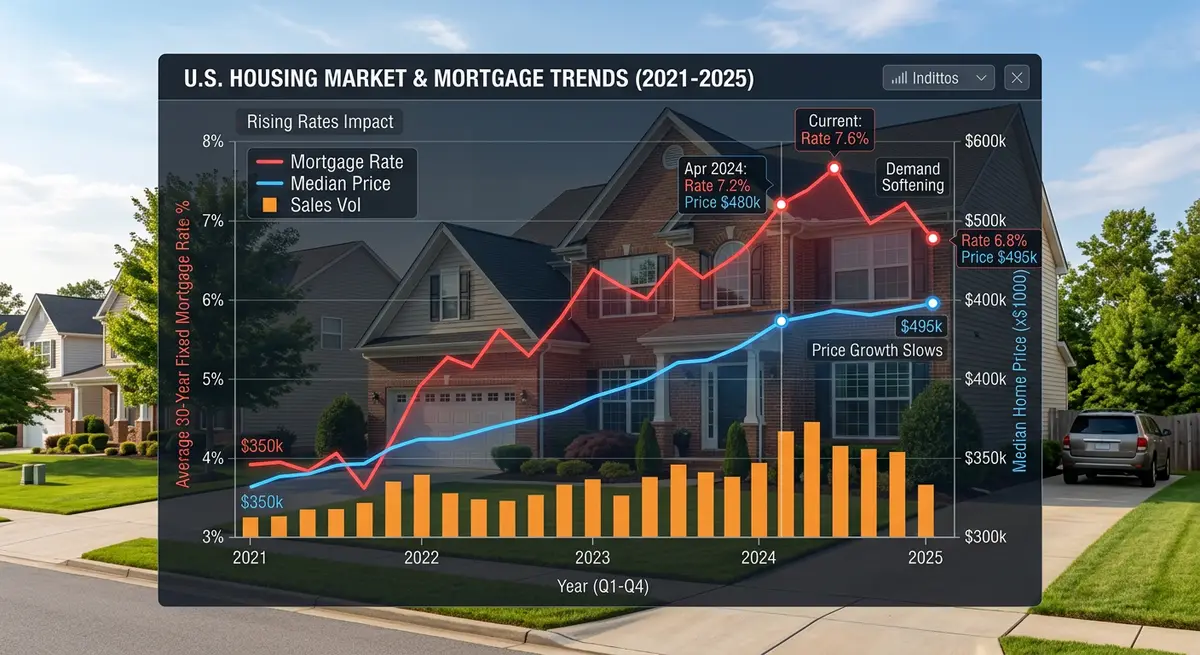
The Federal Reserve’s interest rate policy remains the single most important macroeconomic factor for the single-family rental market. With mortgage rates hovering above 6.5% throughout 2026, the housing market continues to favor renters over buyers — and that dynamic is reshaping the SFR landscape.
Current Rate Environment
The 30-year fixed mortgage rate has remained between 6.5% and 7.0% for most of 2026, with minimal movement despite expectations of Fed rate cuts. The persistence of elevated rates reflects several factors:
- The Fed has cut the federal funds rate by only 50 basis points in 2026
- Long-term bond yields have stayed high due to inflation concerns
- Mortgage spreads remain elevated compared to pre-2022 norms
- Lender caution in the secondary mortgage market keeps rates sticky
Impact on Home Purchase Affordability
At current rates, the monthly payment on a median-priced home ($412,000) with a 20% down payment is approximately $2,120 for principal and interest alone. Adding property taxes, insurance, and maintenance brings the total cost of ownership to roughly $2,800 per month.
For comparison, the median rent for a single-family home nationally is $2,050 per month. This gap — combined with the $82,400 down payment required — keeps many would-be buyers in the rental market, directly benefiting SFR operators.
What Fed Rate Cuts Would Mean
If the Fed continues cutting rates in late 2026 and into 2027, the impact on the SFR market would be mixed:
Potential headwinds:
- Lower mortgage rates could pull some renters into homeownership, reducing demand
- Property acquisition costs would rise as more buyers compete
- Cap rates could compress as property values rise faster than rents
Potential benefits:
- Refinancing existing portfolio debt at lower rates improves cash flow
- Acquisition financing becomes cheaper, improving leveraged returns
- Construction loans for build-to-rent projects become more viable
Historically, modest rate cuts (50-100 basis points) have had limited impact on SFR demand because the purchase affordability gap remains large even after small rate reductions.
The Lock-In Effect Persists
A significant factor keeping inventory low and supporting the rental market is the “lock-in effect” — existing homeowners with mortgage rates below 4% are reluctant to sell and take on a new mortgage at 6.5%+. This effect has kept for-sale inventory constrained and sustained rental demand.
Even with modest rate cuts, the lock-in effect will persist until rates fall meaningfully below 5%, which most economists do not expect until 2028 at the earliest.
Strategic Implications for SFR Operators
The current rate environment supports several strategies:
- Hold and optimize: With demand strong and acquisition expensive, focus on optimizing existing portfolios through rent growth and operational efficiency
- Selective acquisition: Properties in secondary markets with strong rental demand and reasonable cap rates (7-8%) remain attractive
- Fixed-rate debt: Lock in long-term fixed-rate debt on acquisitions to protect against future rate volatility
- Tenant retention: With demand likely to remain strong, focus on retaining quality tenants rather than maximizing rent on every turnover


