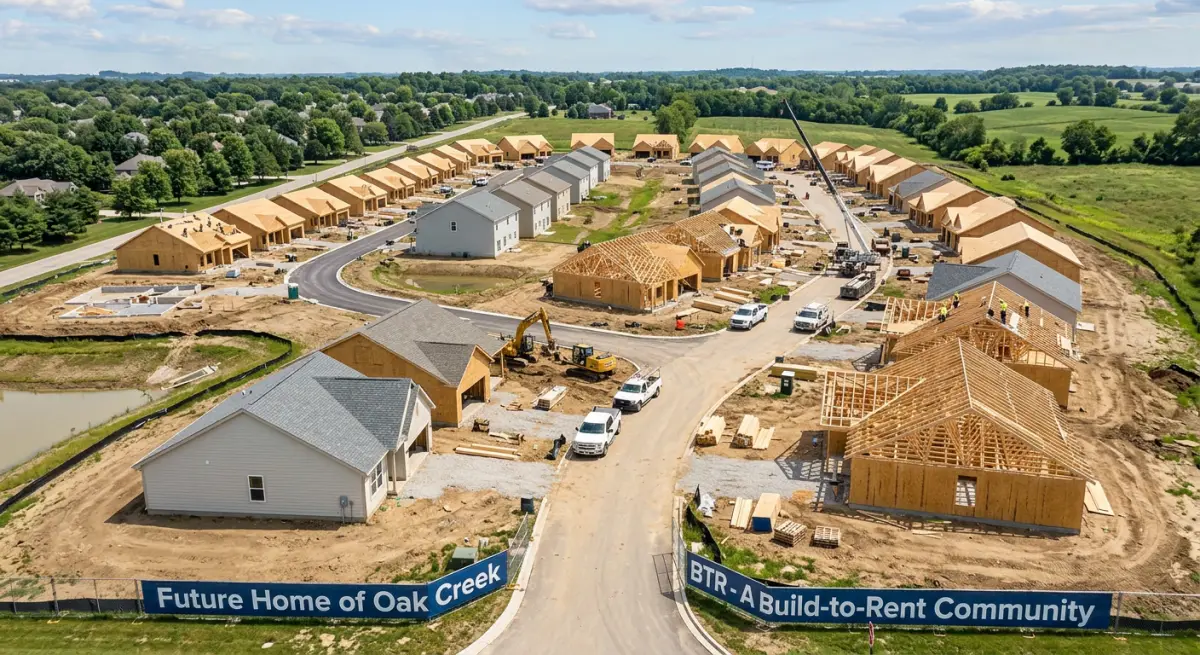
Build-to-rent (BTR) communities — purpose-built neighborhoods of single-family rental homes — are seeing record investment as institutional capital flows into secondary markets across the Sun Belt.
The BTR Boom by the Numbers
New BTR starts were up 12% year-over-year in Q3 2026, with more than 18,000 homes under construction nationally. The top markets for BTR development include:
- Indianapolis: 1,840 homes under construction
- Columbus, OH: 1,520 homes
- San Antonio: 1,380 homes
- Huntsville, AL: 920 homes
- Boise, ID: 840 homes
These secondary markets offer yield spreads of 150-300 basis points over primary SFR markets like Atlanta, Dallas, and Phoenix, where land acquisition costs have made new BTR development economically challenging.
Why Institutional Investors Are Betting Big
The thesis behind BTR is straightforward: the structural shortage of single-family homes for sale has created a large, durable pool of renters who want single-family living but cannot or choose not to buy. BTR communities offer institutional investors the scale economies of multifamily with the rent premiums of single-family product.
Key advantages driving the BTR model:
- Operational efficiency: A single management team can oversee 200+ homes in one community
- Lower turnover: SFR tenants stay 3+ years on average versus 12-18 months in apartments
- Amenity appeal: Shared amenities (dog parks, pools, fitness centers) attract premium renters
- Build-to-suit design: Homes are designed for rental durability, not homeowner aesthetics
Challenges and Risks
Despite the momentum, BTR faces headwinds. Rising construction costs, labor shortages, and permitting delays have pushed project timelines out by 6-9 months in many markets. Some developers are also encountering community resistance, with neighborhood groups opposing high-density rental projects.
Additionally, the yield advantage of secondary markets may compress as more capital chases the same opportunities. Markets like Indianapolis and Columbus are already seeing increased competition for land, which could erode the cost advantages that made them attractive in the first place.
What This Means for SFR Operators
For traditional SFR operators who acquire existing homes rather than build, the BTR boom is a mixed signal. On one hand, it validates the strong demand for single-family rentals. On the other, it introduces new competition in markets where BTR communities are being built.
The most successful operators will differentiate on service quality, local market knowledge, and tenant relationships — areas where national BTR platforms often struggle to match local operators.
